
Phone Numbers serve as endpoints accessible to the external world for dialing purposes. In some systems, they are referred to as DIDs (Direct Inward Dialing). In the United States, phone numbers typically consist of 10 digits, such as 555-666-7777.
Phone Numbers facilitate both voice and chat-based communication. When someone dials the number, it triggers a voice Flow, while sending an SMS message to the number initiates a chat Flow.
Purchasing a Phone Number
You can easily purchase a phone number within Evo Voice. Simply follow this guide to complete the process.
Associating Phone Number with Flow
After purchasing a new phone number in Evo Voice, it's crucial to assign it to a Flow immediately to ensure proper functionality. Failure to do so may result in no action when the number is called. Follow this guide to learn how to set an initial flow for a new phone number.
Virtual Phone Numbers
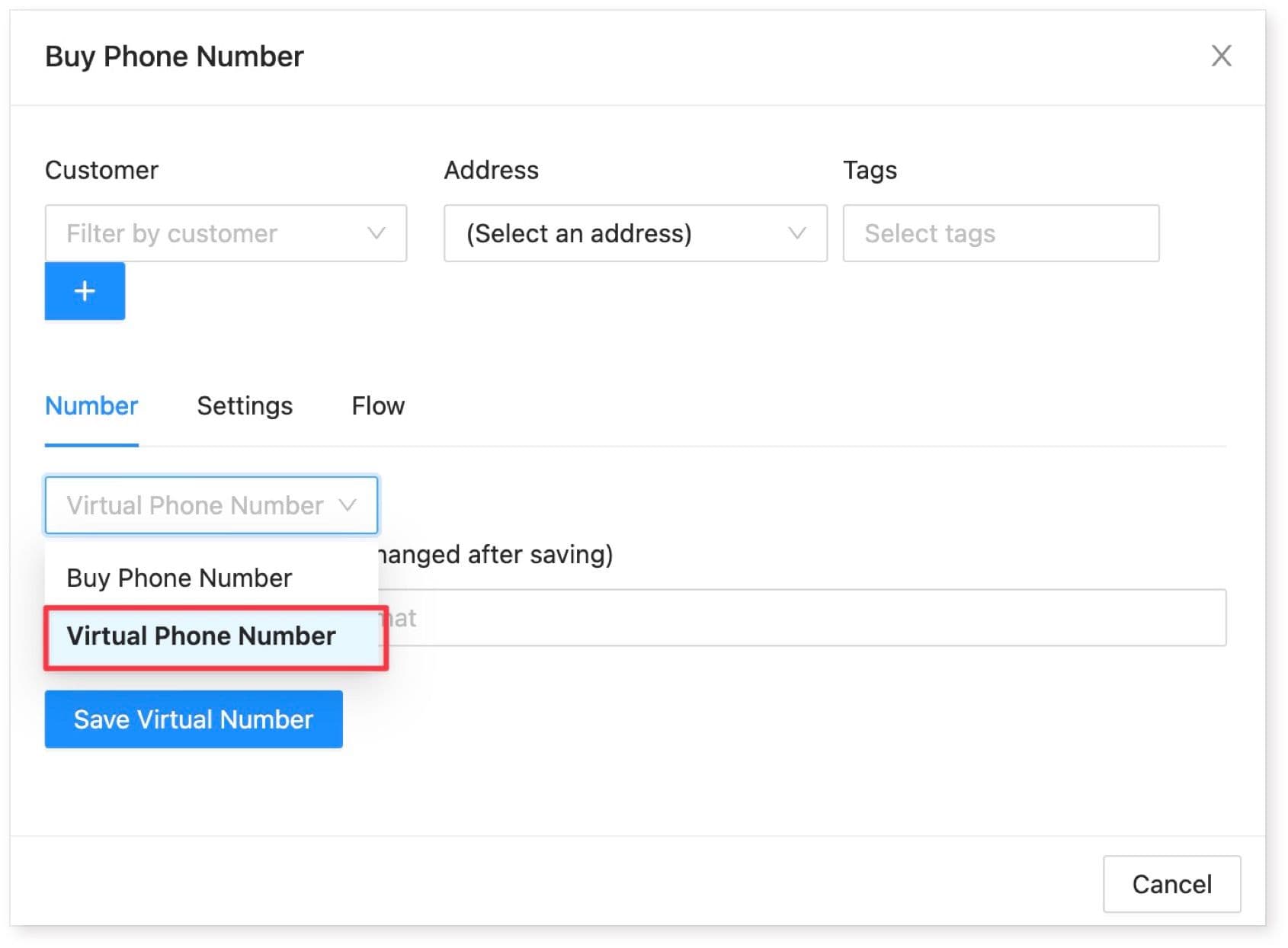
Virtual phone numbers are an advanced feature primarily utilized with SIP trunks. These numbers generate an entry in our database, enabling assignment of flows and other configurations. However, they will only ring if a SIP trunk is configured to send the number in the TO header of the SIP INVITE.
In most cases, only a small subset of Evo Voice users will need to employ this feature, typically following specific instructions from the Evo Voice team.
Verified Caller IDs
One valuable feature of Virtual Phone numbers is the capability to make outbound calls with a non-owned caller ID. You can use this guide to verify a caller ID in Evo Voice.
Deleting a Phone Number
In general, we recommend deleting a Phone Number only if you are absolutely certain that it will never be used again. It's important to understand that deleting a phone number releases it on the Twilio side, which means there's no guarantee you'll be able to retrieve the same number again. Deleting a phone number permanently releases it.
System Failure Messages
Evo Voice provides support for delivering a predefined message to the caller in the event of a complete system failure.
While servers failing is an uncommon occurrence in an ideal environment, Twilio allows for a backup URL to be utilized for call routing should such an event transpire. To mitigate potential server failures for this backup URL, Evo Voice offers the capability to generate a hardcoded file containing a predefined message. Twilio will then use this message in the event of a server failure.
You can configure a global message to be utilized under System > Settings > Failure. Additionally, we support this feature at a per phone number level.