
Introduction
Evo Voice (Voice) is a versatile communication platform offering the key features of a PBX with added flexibility. It supports multi-channel communication, enabling customized solutions for various communication needs.
Core Concept
The Voice platform is built around three key components:
1. Endpoints
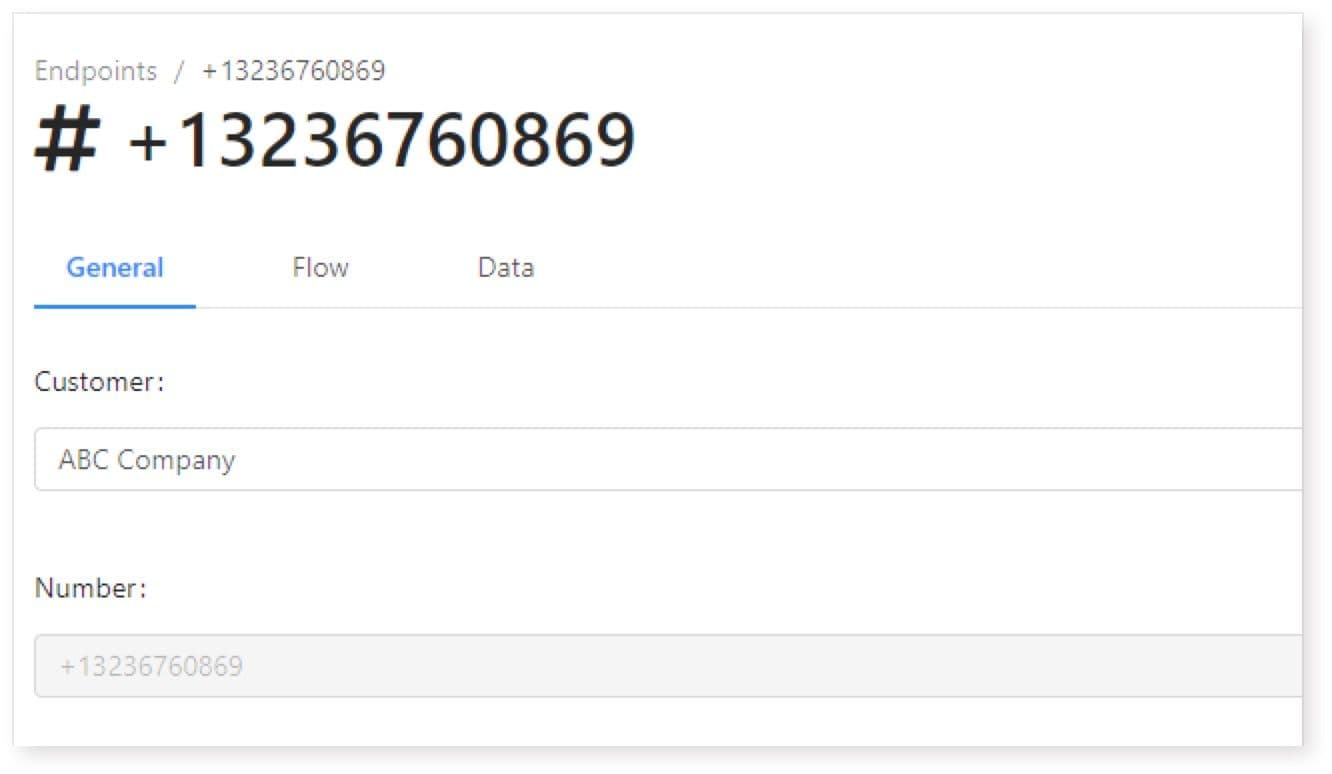
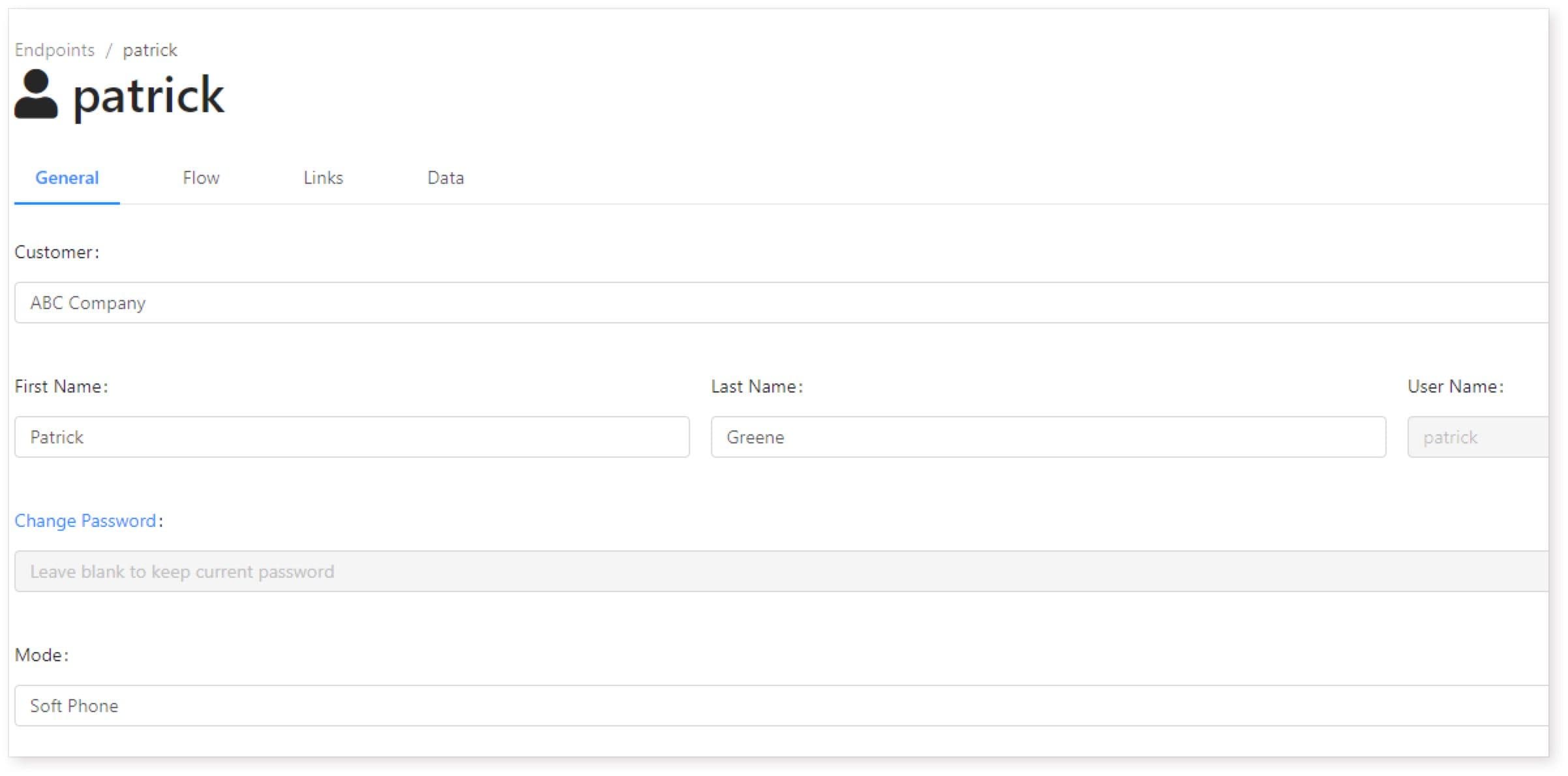
Endpoints represent entities that send or receive communication. Examples include:
-
Phone Numbers (DIDs): Receive calls and SMS.
-
Users/SIP Devices: Make/receive calls and chat messages.
-
Email Addresses: Receive chat messages via email.
The following images show a phone number endpoint and a user endpoint:
Number Endpoint:
User Endpoint:
2. Flows
A Flow is a sequence of communication instructions executed when an endpoint initiates communication.
Example:
- A Flow might say "Hello World!" in a specific voice before dialing a user.
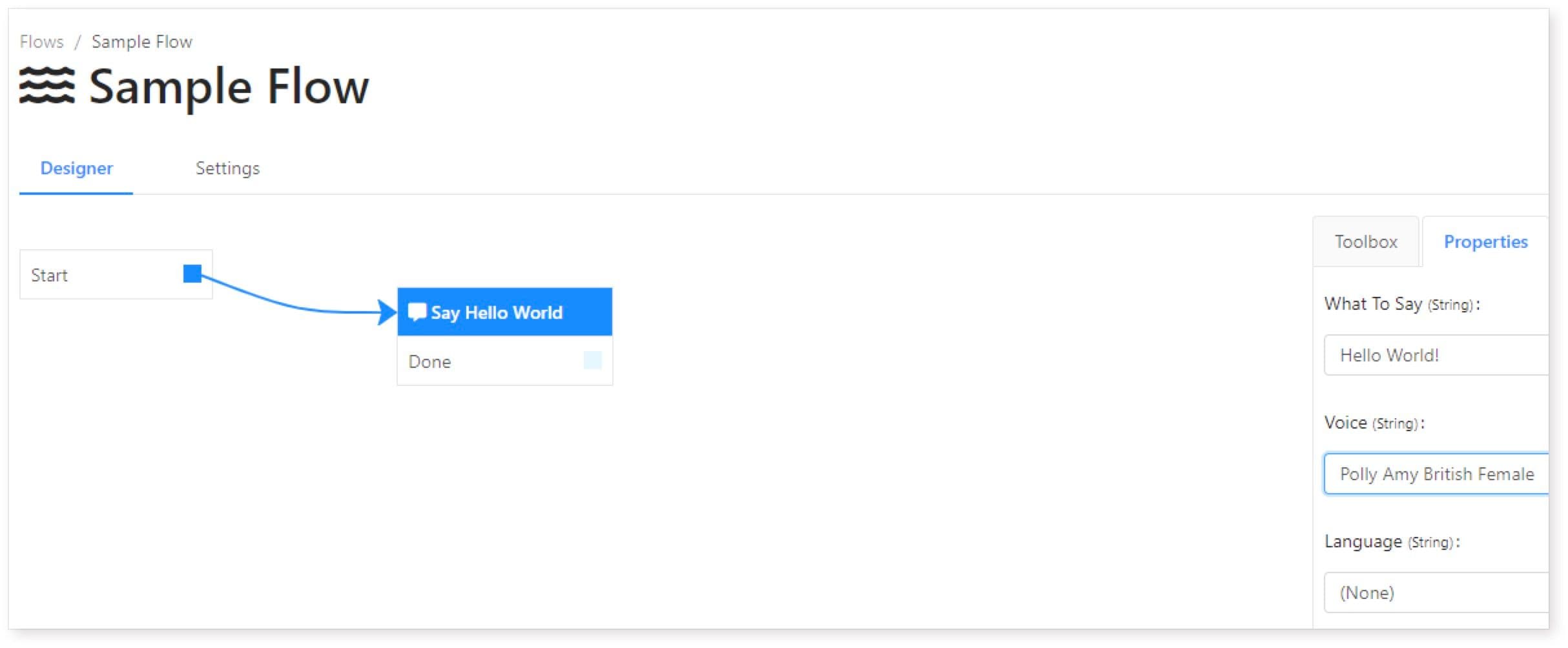
The Flow above is very simple, whenever an Endpoint associated with that flow initiates communication (e.g. someone dials the Phone Number or the user tries to dial out), the system will Say in a British Female voice "Hello World!". The selected box is called a Node. Flows are a series of nodes that are connected together by transitions. Here is another example of a Flow with multiple Nodes
- Flows consist of connected Nodes and can range from simple to complex configurations, allowing for reusable design patterns.
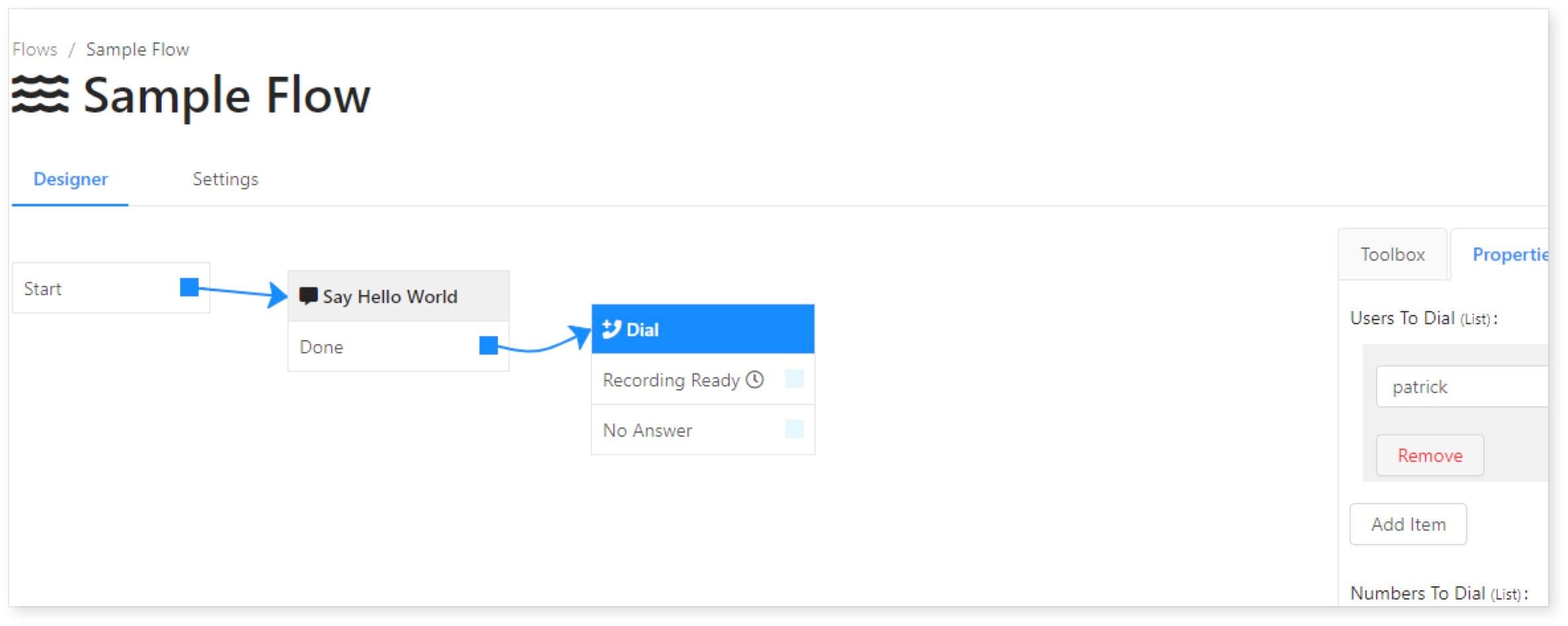
As you can see in the above flow, we have a Say node which has a Transition to a Dial node. In the above flow, when someone dials that Phone Number, the system will first say "Hello World" and then it will dial the user "patrick".
Flows can become very complicated, but the Voice system was designed to allow for simple, but powerful flows that can be broken down into reusable chunks.
3. Nodes
Nodes are the building blocks of Flows, performing specific tasks and transitioning to the next step.
Example:
- A "Say" Node speaks a message and transitions to a "Dial" Node to call a user.
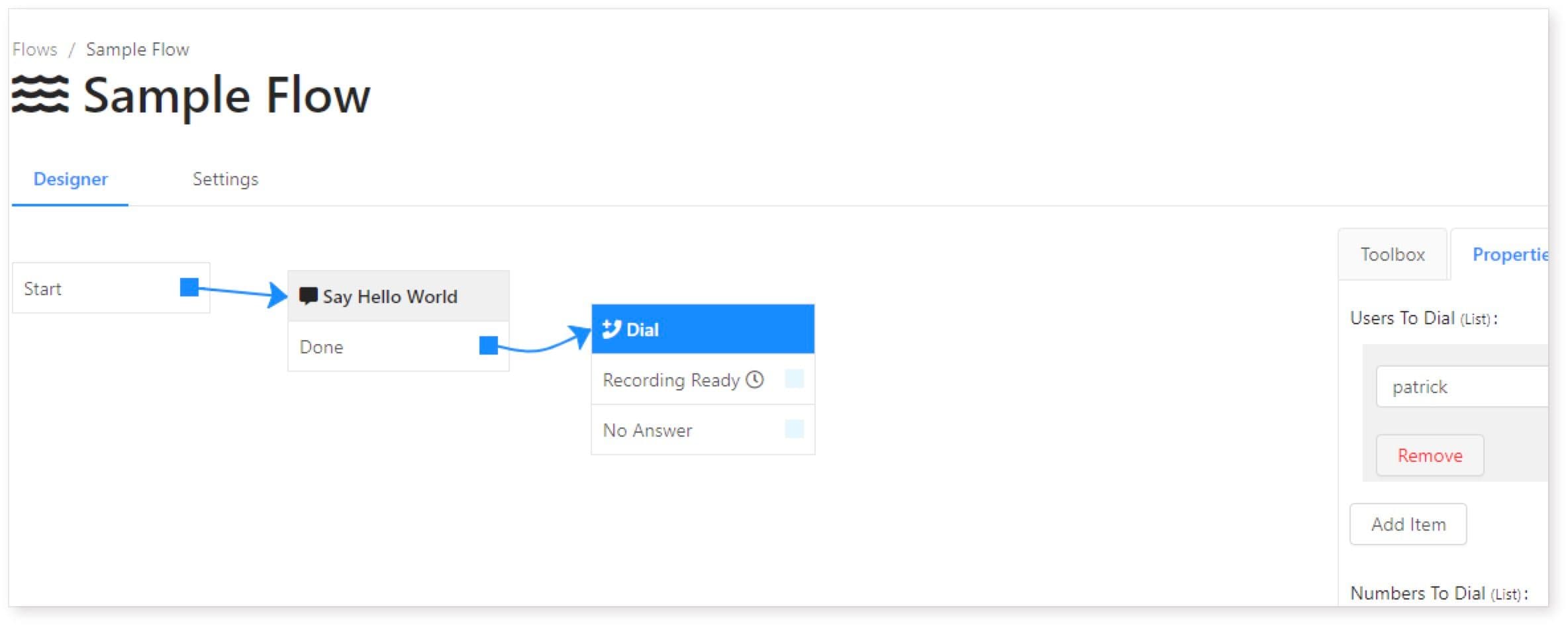
You can see that the Say Node has a single Transition "Done" which is connected to the Dial node and which will be followed as soon as the Say node is done talking. Most Nodes have at least one Transition, but some have multiple Transitions, for example:
- Nodes can have single or multiple transitions depending on the logic, such as routing calls based on the day of the week.
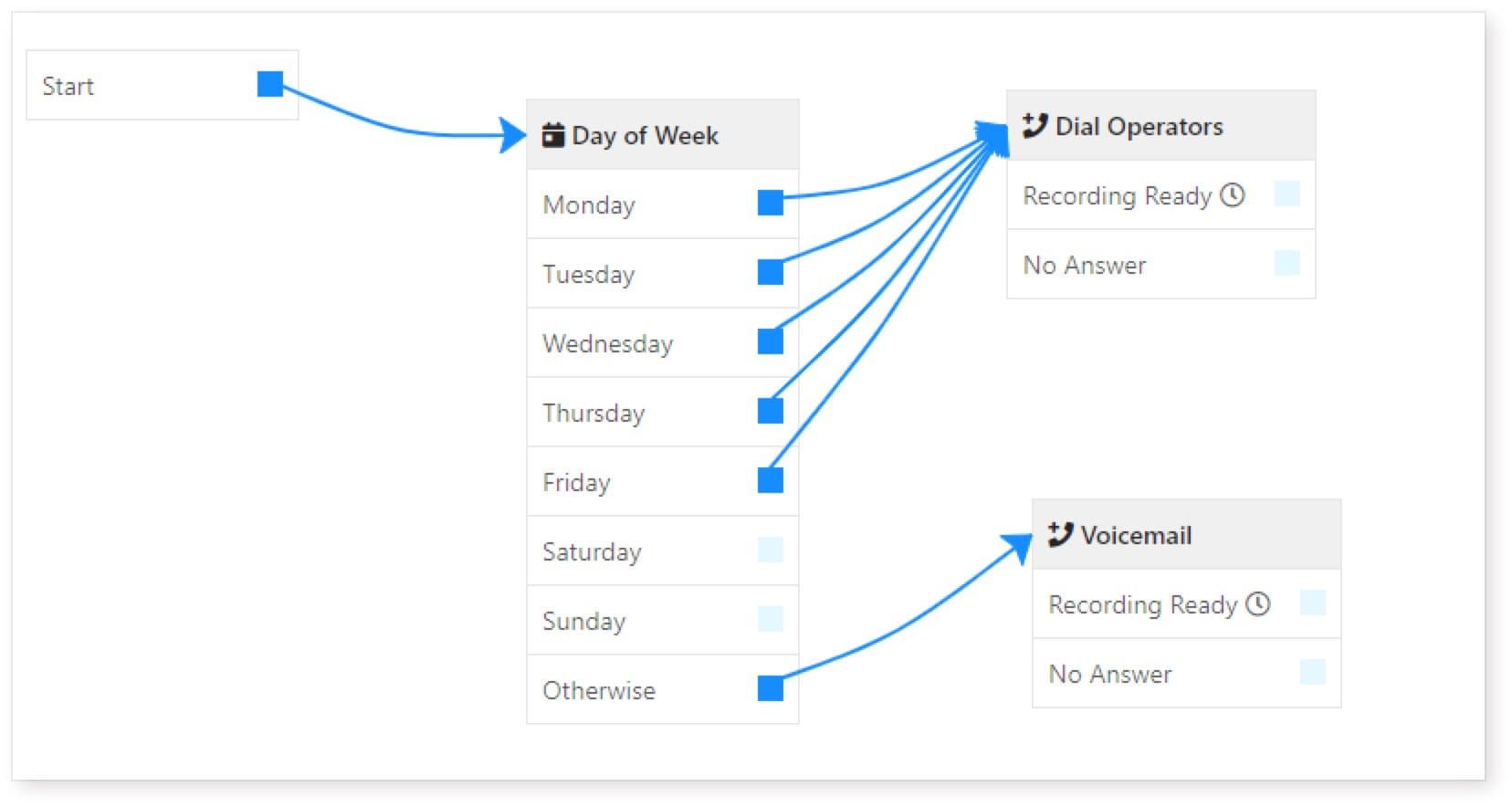
In the above example, you can see that we used a Day of Week node which has multiple Transitions. The above flow Dials the Operators Mon-Fri otherwise it sends the call to Voicemail.
Summary
Evo Voice is a user-driven, multi-channel platform designed for flexibility and simplicity. Its core elements—Endpoints, Flows, and Nodes—enable powerful communication solutions that adapt to various scenarios with ease.